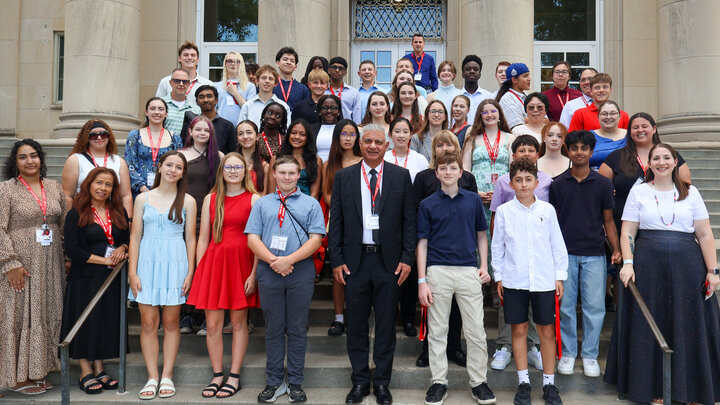
The Mid-America Transportation Center (MATC) STEM Academy recently welcomed high school students from across Nebraska to the University of Nebraska–Lincoln (UNL) for a five day immersive experience focused on science, technology, engineering, and mathematics (STEM). The program brought together 36 students, along with teachers, student mentors, and MATC staff, to explore real-world applications of STEM through hands-on activities, lab experiences, and industry engagement.
The academy began with an orientation designed to build community and introduce students to the week ahead. Early activities included a rocket engineering challenge led by UNL Engineering Ambassadors, giving participants an engaging introduction to problem-solving and teamwork. This strong start set the tone for a week centered on innovation, collaboration, and exploration.
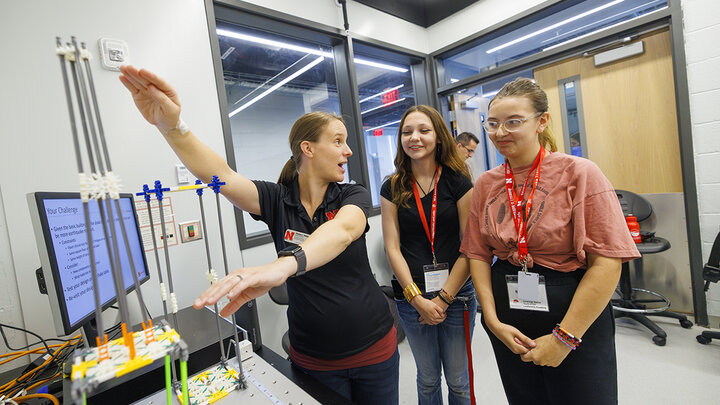
Throughout the program, students participated in a variety of engineering lab sessions across UNL’s College of Engineering. These included exposure to materials testing, environmental systems, and structural engineering concepts, allowing students to engage directly with the tools and technologies used in the field. A tour of Kiewit Hall and sessions focused on emerging technologies such as drones and artificial intelligence in transportation provided additional insight into modern engineering practices.
Learning extended beyond campus as students explored real-world environments. A visit to the Spring Creek Prairie Audubon Center introduced participants to ecological systems, biodiversity, and water quality, highlighting the connections between STEM and environmental stewardship. At Nebraska Innovation Campus, students gained exposure to applied research and innovation, further broadening their understanding of STEM careers and opportunities.
One of the program’s highlights was a day spent exploring Omaha’s Henry Doorly Zoo and Aquarium. Students experienced science in action by observing diverse ecosystems and animal habitats, reinforcing how STEM principles are applied in conservation and environmental systems. The experience offered a unique perspective on how scientific knowledge translates into real-world impact.
The formal dinner was held at the Nebraska State Museum, where students gathered for an evening of connection and learning. The keynote address was delivered by Dr. Jennifer Nelson, Vice Chancellor for Research and Innovation, who oversees UNL’s research and economic development enterprise. Following the dinner, students had the opportunity to explore the museum, extending their learning experience in a dynamic and engaging setting.
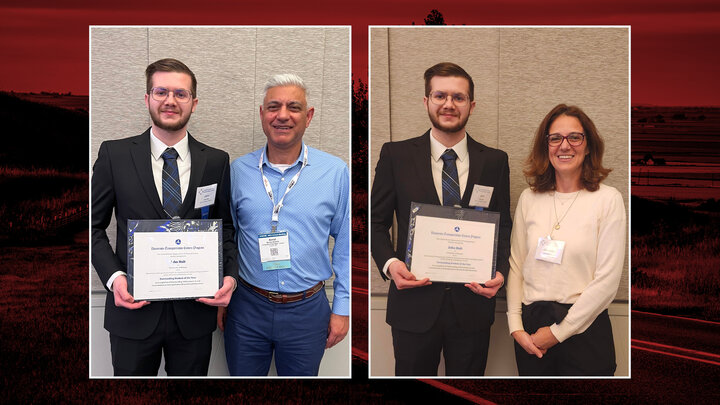
The program concluded with reflection and recognition. Students participated in a final STEM-focused activity mapping UNL's indigenous garden through UNL Libraries and received certificates acknowledging their participation. By the end of the week, participants had gained not only technical knowledge but also stronger connections with peers, mentors, and professionals in the field.
The success of the MATC STEM Academy was made possible through strong partnerships with organizations and institutions that contributed their time, expertise, and resources. From UNL faculty and facilities to regional partners and educational sites, these collaborations created meaningful, hands-on learning opportunities for students.
Overall, the MATC STEM Academy continues to play a vital role in inspiring the next generation of STEM leaders by providing early exposure to engineering, research, and innovation in a supportive and engaging environment.